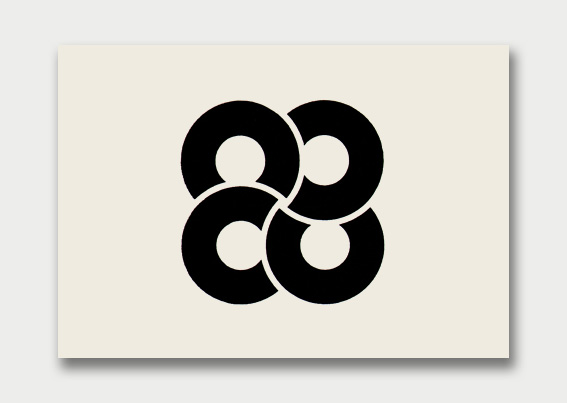
Taiyo Kikai-Kogyo Machine Factory
Gebrauchsgraphik No. 6, 1966
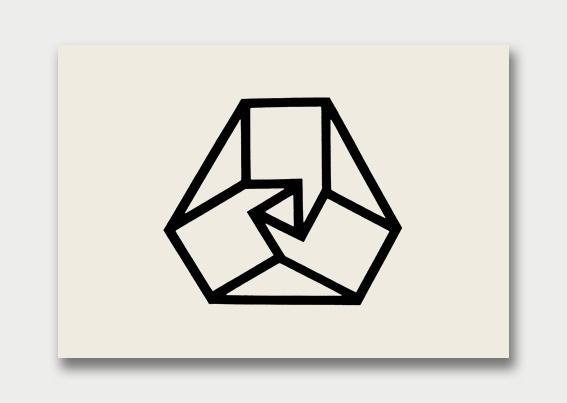
Yuken-Boeki Insurance Company
Gebrauchsgraphik No. 6, 1966

Japanese Society for the Promotion of Science
Gebrauchsgraphik No. 6, 1966
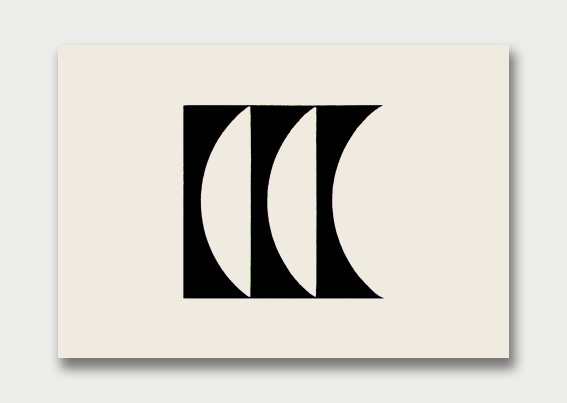
Japan Camera Club, Osaka
Graphis Annual 54/55

Corona Automobile Model
Gebrauchsgraphik No. 6, 1966

Japan Industrial Designers Association
Graphis Annual 54/55

Japanese Committee of the World Power Conference
Gebrauchsgraphik No. 6, 1966

Tonen Petro-Chemical Co.
Graphis Annual 63/64
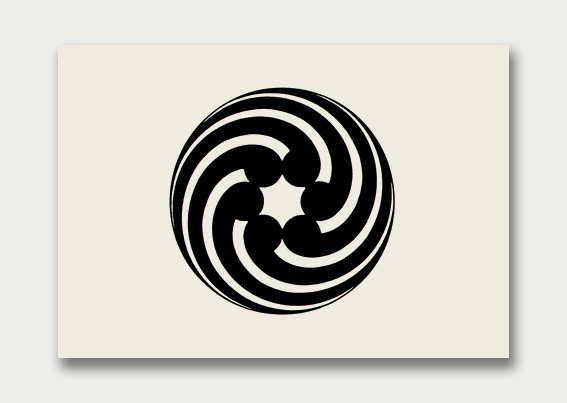
Taiyo Machine Industry Co.
Graphis Annual 63/64

Daishowa Seishi Paper Mill
Gebrauchsgraphik No. 6, 1966
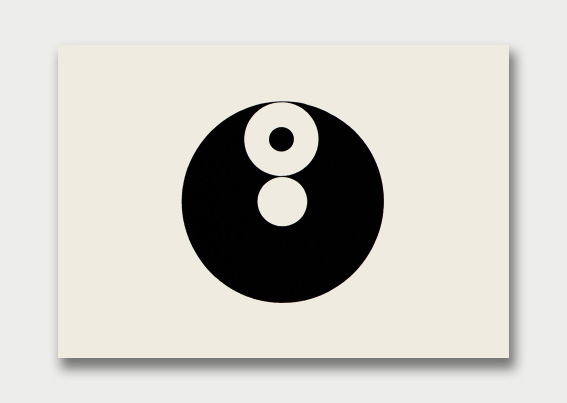
Corona Automobile Model
Gebrauchsgraphik No. 6, 1966
. . . . . . . . . . . . . . . . . . . . . . . . . . . . . . . . . . . . . . . .
Logos, Signets and Trademarks by Yusaku Kamekura (1915–1997)
When one examines Japanese graphic design in the 20th century, the figure that looms largest is Yusaku Kamekura. In researching him for this post, there are consistent superlatives that crop up, pioneer and innovator in particular. In his youth, Kamekura attended the Bauhaus-oriented Institute of New Architecture and Industrial Arts in Tokyo. He served as art director for many Japanese publications in the 1930s to 1950 and in 1955 he was instrumental in establishing the Japan Advertising Arts Club.
Kamekua is perhaps best known for posters for the 1964 Tokyo Olympic Games and for Expo ’70 in Osaka, but his body of work is prolific and all encompassing. His spare and fluid logos are an ideal fusion of Modernist style with the grace of traditional Japanese design.
An ethical and uncompromising designer, this description plus the following direct quote from Kamekura portrays his high standards:
Kamekura has never become enslaved by corporate executive policy. He will only work for a company if he is convinced that the work is something that he can conceptually and ethically agree with and work on directly with the executives.
“No matter how much money I am offered, I will not do work that I am not convinced is right. This means that I refuse to do any work for political parties or religious groups because I find that I usually cannot agree with their ideals and purposes… I simply cannot get inspiration to do work that does not seem worthwhile and of interest to me. My work is only valid if I am involved in creating the image for the entire company in terms of logos and poster designs and so forth, and I don’t like to leave even a single poster design in an ambivalent stage of development.”
–Art Directors Club, 1993 (Quote pulled from article in Graphic Design magazine)
. . . . . . . . . . . . . . . . . . . . . . . . . . . . . . . . . . . . . . . .
Further information:
Art Directors Club – 1993 Hall of Fame profile
Yusaku Kamekura – Fan blog
Pink Tentacle – Poster collection
>> Yusaku Kamekura flickr set
. . . . . . . . . . . . . . . . . . . . . . . . . . . . . . . . . . . . . . . .
 Sandi Vincent grew up in the bay area of California surrounded by mid-century modern architecture and other influences responsible for her affinity for the period and its pop style, including her early exposure to The Monkees, The Avengers and Gerald McBoing-Boing. Sandi now resides in Portland and is a board member of a local nonprofit preservation group, the Mid-Century Modern League. In her day job at a community foundation, she sports the web/social media/print materials coordinator title.
Follow Sandi on Twitter > @SandiV
. . . . . . . . . . . . . . . . . . . . . . . . . . . . . . . . . . . . . . . .
Psst… to keep up to date:
- You can grab the
AQ-V RSS Feed - And follow
AQ-V on Twitter - And/or the
AQ-V Fan Page
. . . . . . . . . . . . . . . . . . . . . . . . . . . . . . . . . . . . . . .


{ 4 comments… read them below or add one }
I didn’t knew Mr Yusaku Kamekura, shame on me. Because I knew his work.
This serie is powerful and is opening a new way for contemporary graphists, without forgetting their graphic roots (see, for example, the town logos here: http://pinktentacle.com/2010/04/50-japanese-town-logos-with-kanji/
As always, a pleasure.
Anyone else notice that the logo for the Japan Industrial Designers Association is the same as the icon for Photoshop Express iPhone App, turned upside down? Hmm…
Hi Egiova, so glad you have made acquaintance with Kamekura. Classic work and a great reference for contemporary designers indeed. I remember admiring those Japanese town logos last year, thanks for bringing them to my attention again.
Hi Lily, good catch.
Muito bom!