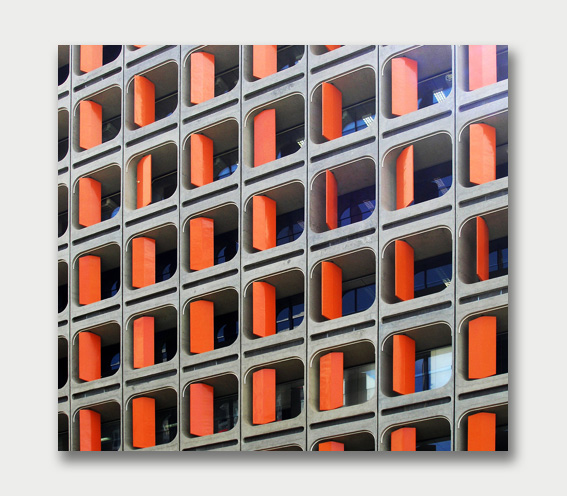
Brasília Residence | Architect: João Filgueiras Lima (also known as Lelé), 1980
Photo by ©Seier+Seier (see neighboring residence)
Brazilian Modernism cannot be reduced to two or three famous names, there is so much talent around. Three near-identical towers in Brasilia show the hand of a master, this is one of them.
Late modernism, c. 1980, dealing beautifully with the issues of climate in plastics, fiberglass and concrete. Detailing and surfaces nothing short of perfect.
Standing in front of a house like this, it becomes very difficult to remember exactly what postmodernism rebelled against. –Seier+Seier
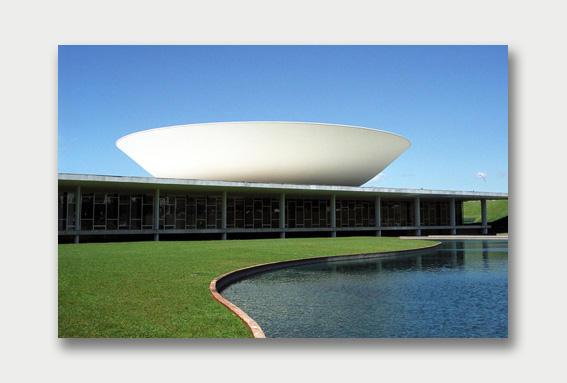
Brazilian Parliament Building – Brasília | Architect: Oscar Niemeyer, 1960
Photo by ©Rick Ligthelm
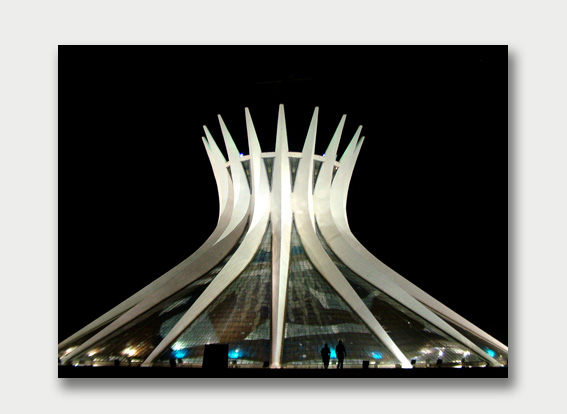
Catedral de Brasília | Architect: Oscar Niemeyer, 1960
Photo by ©Daniel Fatori
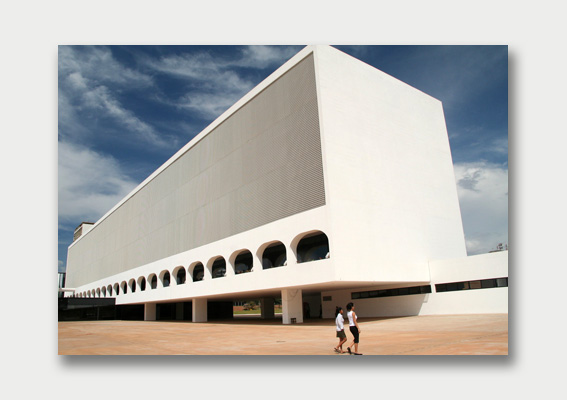
Brazilian National Library – Brasília | Architect: Oscar Niemeyer, 1960
Photo by ©Luiz Felipe Castro
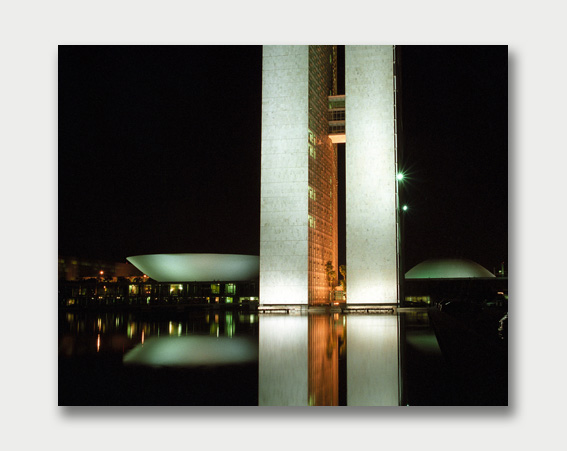
Brazilian Parliament Building – Brasília | Architect: Oscar Niemeyer, 1960
Photo by ©Rick Ligthelm
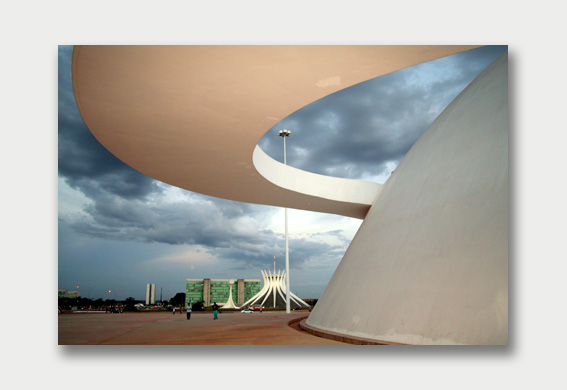
Cultural Complex of the Republic – Brasília | Architect: Oscar Niemeyer, 1960
Photo by ©Luiz Felipe Castro
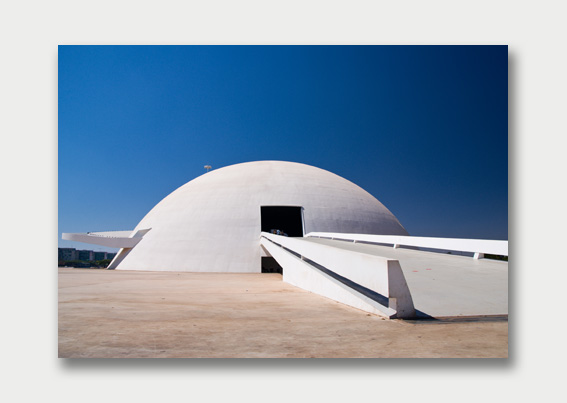
Cultural Complex of the Republic – Brasília | Architect: Oscar Niemeyer, 1960
Photo by ©Florian Knorn
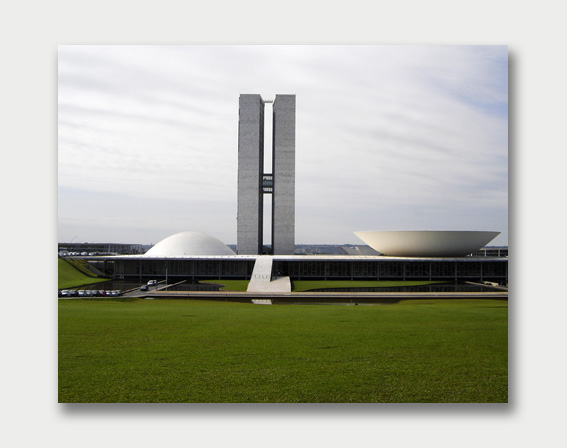
National Congress of Brazil – Brasília | Architect: Oscar Niemeyer, 1960
Photo by ©Marcelo Jorge Vieira
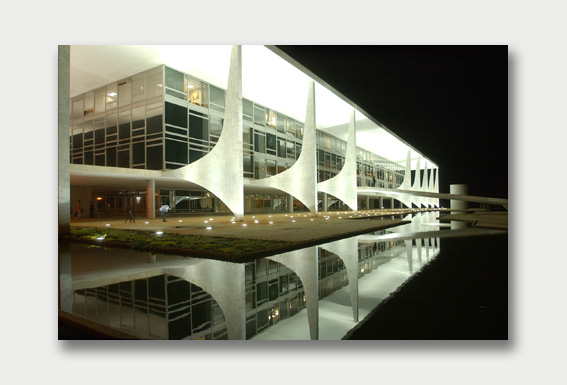
Palácio do Planalto – Brasília | Architect: Oscar Niemeyer, 1960
Headquarters of the Executive Branch of the Brazilian Government located at the Plaza of the Three Powers. Photo by ©Anne Marie
. . . . . . . . . . . . . . . . . . . . . . . . . . . . . . . . . . . . . . . .
Brasília, celebrating its 50th anniversary this past spring, is not only a planned city but it is also a planned capital which serves as a historic landmark in urban planning. The new capital—located in the center of Brazil—was inaugurated April 1960. Prior to the city’s remarkably quick construction, the area resembled a desert with no people, scarce water and plants.[1] When seen from above, the main planned part of the city’s shape resembles an airplane or a butterfly.[2]
Urban planner Lúcio Costa and architect Oscar Niemeyer intended that every element—from the layout of the residential and administrative districts (often compared to the shape of a bird in flight) to the symmetry of the buildings themselves—should be in harmony with the city’s overall design. The official buildings, in particular, are innovative and imaginative.
–UNESCO World Heritage Centre
Brasilia’s History:
President Juscelino Kubitschek ordered the construction of Brasília, fulfilling an article of the country’s constitution dating back to 1891 stating that the capital should be moved from Rio de Janeiro to a place close to the center of the country. The plan was originally conceived in 1827 by José Bonifacio, an advisor to Emperor Pedro I, who presented a plan to the General Assembly for a new city called Brasilia with the initial idea of moving the capital farther westward from the already heavily populated southeastern corridor. The bill was not enacted because Emperor Pedro I dissolved the Assembly.
Lúcio Costa won a contest and was the main urban planner. Oscar Niemeyer, a close friend of Lúcio’s, was the chief architect of most public buildings and Roberto Burle Marx was the landscape designer. Brasília was built in 41 months, from 1956 to April 21, 1960, when it was officially inaugurated. –Wikipedia
. . . . . . . . . . . . . . . . . . . . . . . . . . . . . . . . . . . . . . . .
For further information:
>> The History of Brasília
>> Wikipedia
>> About Brasília
. . . . . . . . . . . . . . . . . . . . . . . . . . . . . . . . . . . . . . . .


{ 2 comments… read them below or add one }
Great round-up Amy—Niemeyer has an incredible imagination and vision.
Thanks Mark for the feedback! Yes, so true about Niemeyer’s remarkable vision.